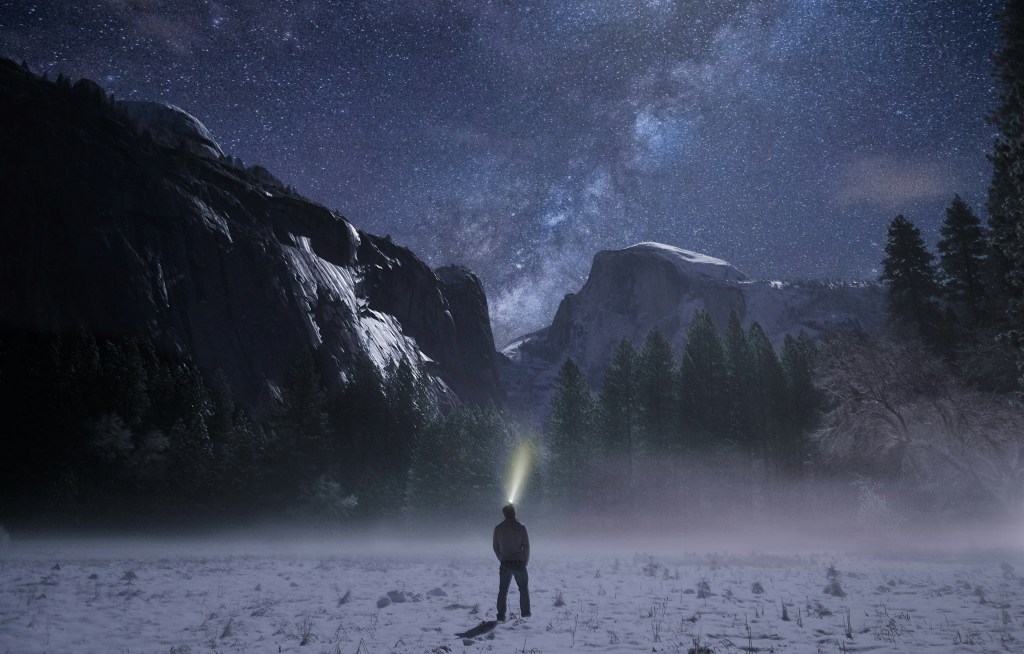
Photo by Jason Strull on Unsplash
On Sunday, February 2nd, also known as Groundhog Day, not one, but three groundhogs saw their own shadows. Punxsutawney Phil in Pennsylvania, General Beauregard Lee in Georgia, and Yonah in North Georgia all saw their shadows, meaning six more weeks of winter are headed our way (Savannah Morning News).
As I’ve gotten older, I’ve come to appreciate the winter season, more aptly, all the seasons for what they represent and have to offer. Growing up in Southern California, the weather is fairly consistent across all seasons except shorter days in the winter.
While I have never experienced waking up to see the street out my window covered with snow, winter brings its own unique spirit. Following autumn filled with friends and family coming together to celebrate the holiday season, or stretching yourself thin to meet all your goals by the end of the year everything suddenly becomes quiet.
In my last post, I discussed how reading has become a more integral piece of my life as the years go by. The more I read, the more I plan and time what books I want to read during specific seasons.
If a book takes place in the summer or has autumnal themes, I’ll wait until that time of the year to read said book. It helps ground me into what season I currently find myself in and allows me to appreciate more the often unnoticed beauty of the season, both figuratively and literally.
That being said, this year I picked up several books on my TBR that take place in winter, two of which I wanted to write about today. I now view winter as not just a time of year, but as a metaphor for the seasons we inevitably will experience throughout our lifetimes.
Wintering: The Power of Rest and Retreat in Difficult Times by Katherine May was the first book to start chipping away at my preconceived notions of the season. The memoir follows May’s experience dealing with difficult moments, tying in winter’s historical and cultural significance.
When we observe the natural world, we see how everything moves in seasons. Certain plants and animals are more active during the summer. Bears hibernate in the winter, while geese migrate south for warmer climates.
Historically, and still in some parts of the world, the seasons dictated not only the weather but the pace at which people worked and lived. No matter how hard you try to plant seeds in the winter snow, they simply aren’t going to grow if it isn’t the right time.
There’s a time for sowing and a time for reaping. However, one sits idle, between these two moments, awaiting the future harvest. And recently, I’ve started associating this “in-between” time with the winter season.
As I’ve mentioned in several blogs, I’m at a place in my life where no matter how hard I try, nothing seems to be changing. It can be frustrating to see all my friends starting the newest chapter of their lives or finally achieving what they have been working towards when I’m still stuck trying to make things work.
Taking the time to think more deeply about the winter season, its significance, and how it can apply to my life, I’ve realized that like the seasons the world goes through, we as individuals go through similar seasons within.
There are seasons in which we are pumping out the best work we’ve ever done, piling on achievement after achievement. Yes, our schedules are packed from sunrise to sunset, but somehow we have the energy to get it all done and still reach towards greater things.
In other seasons, it can be hard to find the motivation to start working towards a goal, only if we even have goals in the first place. As if lost in a snowstorm, it is impossible to see the path in front of us and every freezing step takes all of our energy.
I’ve learned that the best thing you can do in times like these is get yourself out of the snowstorm. Stop trying to find your way in the freezing snow. Lock yourself in your cabin and rest until the storm subsides.
This has been the hardest idea to wrap my head around and implement into my own life. I understand I’ll likely burn out if I keep pushing myself without taking time to rest or recover. However, if I stop to rest now, I will fall behind further and further.
This internal conflict led me to Slow Productivity, by Cal Newport. In this book, Newport defines the idea of “Slow Productivity” as “a philosophy for organizing knowledge work efforts in a sustainable and meaningful manner.” (Newport, p. 8). He then lists three core principles: do fewer things, work at a natural pace, and obsess over quality.
I highly recommend this book if you are feeling burnt out and struggling with your workload, but the principle most relevant to this discussion is the second: work at a natural pace.
In the book, he explores the stories of several individuals historically held in high esteem for their great accomplishments in the sciences or arts. In celebrating these individuals, Newport notes that we often overlook the years it took them to achieve such feats.
In contrast to waking up one day with an idea, tirelessly working on it day and night for a month, and achieving success, many of history’s greatest breakthroughs resulted from seasons of focused work, parsed with seasons in which no progress toward the goal was made.
For example, he discusses how Isaac Newton began thinking about gravity in 1655, but it wasn’t until 1670 that he finally published his groundbreaking theories. Georgia O’Keefe produced her best works during her summer retreats to the family’s lakehouse, instead of constantly pushing out pieces all year.
Hustle culture dominates modern society. You are wasting time if you are not working (or making money). Oftentimes slowing down and resting is viewed as laziness or a moral failing.
I have found it hard to step back and slow down, constantly flooded with messages reinforcing this culture. Already feeling behind, taking a moment to stop could be the final nail in the coffin. What if during the one week or month, I rested, I missed the one chance to make something out of my life?
It is easier to stay “plugged in”, with all the ways technology and social media have become integral parts of our lives. Even if we are not in the office or have clocked out for the day, we are bombarded with emails relating to work, or content on social media telling us that we need to work harder and that we should have accomplished certain achievements by specific times in our lives.
Life does not follow a linear path and that’s something that I think makes life more full and beautiful. Throughout life, we all will experience different seasons. Seasons of change, growth, and progress. Seasons of quiet, rest, and stillness.
You might be in the middle of a long winter season. It can seem as if everyone around you is stepping into the warmth of spring, while a blizzard keeps you stuck in the cabin. It’s supposed to be that way, and your time will come.
While there have been many ups and downs in this current season of my life, I am grateful for what this season has and continues to teach me. Slowing down is never easy, but a crucial part of life in the natural world.
And as the fates, Punxsutawney Phil, General Beauregard Lee, and Yonah have foretold, winter will continue. Maybe we should all take these last six weeks of winter, slow down our pace, clear out our schedules, and appreciate the quiet stillness of falling snow.
Thank you for making it this far! I’d love to hear your thoughts on the topic so feel free to comment below or email me at funemployedera@gmail.com. Thanks again for reading and until next time. Take Care!
References
Legoas, M. (2025, February 3). Groundhog day 2025: Did the georgia groundhog see his Shadow? what about Punxsutawney Phil. Yahoo! https://www.yahoo.com/lifestyle/groundhog-day-2025-did-georgia-152012016.html?fr=sycsrp_catchall
May, K. (2020). Wintering: The power of rest and retreat in difficult times. Riverhead Books.
Newport, C. (2024). Slow productivity: The lost art of accomplishment without burnout. Portfolio/Penguin, an imprint of Penguin Random House LLC.




 Jalen Gooch
Leave a comment