
You’re awoken by a lawnmower’s blaring buzz and the clattering of dishes downstairs. Like most days recently, the first thing you do is roll over and pick up your phone. It’s almost noon and with each day that passes you find it harder to believe you were once able to be awake, dressed, and seated in a lecture hall at 9 am.
Within a few minutes on Instagram, your already fragile self-esteem begins to crumble as you scroll through pictures of friends getting engaged, starting their dream jobs, or studying hard in grad school.
As if perfect timing, you receive a notification from LinkedIn from a recruiter. You rush to open it, thinking this could finally be your chance, only to realize that it’s the same AI-generated message you’ve been receiving for weeks. With your hopes already crushed, you continue to scroll through LinkedIn, further digging your own grave.
What did I do wrong to end up so far behind?
FOMO
FOMO, or the Fear of Missing out is defined as “the feeling or idea that you are missing out on something important or enjoyable that others are experiencing.” (Simply Psychology). While often used to describe the feelings someone might experience not getting promoted or being able to party with friends, I believe that the type of FOMO that occurs after graduating college is unique.
Recent Graduates who aren’t keeping up with a typical schedule are hit in all aspects of life. Still not in a relationship? Your friends are starting to get married and have kids. Still looking for a job? You should’ve majored in something else and taken that summer internship. Moved back home with your parents? Everyone you know is finding enlightenment backpacking through Japan and Europe.
FOMO is nothing new to the Class of 2020. Due to the COVID-19 Pandemic, we missed out on many of life’s ‘key milestones’ (If I had a dollar for every time this was mentioned during my graduation ceremony, I would be writing this from the top-story of one of my several penthouses).
You’d imagine this experience would have made us more resilient to the mental health challenges that often arise post-grad. Although, at times it feels as if the losses have only compounded. We (myself at least) placed higher hopes on reclaiming what I lost during the pandemic, through the start of our new lives post-grad.
Not being where you imagined you would be after graduating, whether that be career-wise, or relating to relationships, only doubles the disappointment. My friend and I always joke that if I met myself a year ago now, they would fall to the ground sobbing.
FOMO can stem from the following:
- Feelings of regret about past decisions and choices (Simply Psychology)
- A disconnect between an envisioned post-grad life and reality (WebMD)
- Being paralyzed by the amount of choices you have with what to do next in your life. (Simply Psychology)
- Feeling pressure from others to be at a certain point in your life (WebMD)
I believe the external pressure placed on us has only increased ten-fold due to everyone’s favorite mental health aid: Social Media.
Social Media and FOMO
FOMO relies on the idea that you are missing out on something. Previously, you might have had the passing thought about what your friends are up to. Now we are constantly barraged with concrete updates on every aspect of their lives.
Whenever I find myself spiraling into an episode of self-pity, I always have to stop and ask myself, if I did not know as much as I do about someone, would I envy them the same? More often than not the answer is no.
The more I learn about the ways in which Social Media was designed to often fuel and profit off these insecurities, the more I catch myself falling into harmful thinking patterns.
Author Haddi Brown describes a cyclical relationship in which “social media enables FOMO through constant access to curated lives we aren’t living, and the need for belonging drives continual use, while discontinuity evokes social exclusion starting the FOMO cycle.” (Simply Psychology)
Ironically, one of my favorite interactions on the internet is when someone will overshare and in response someone will comment a screenshot of Michelle Goldberg’s New York Times Opinion Piece aptly titled “We Should All Know Less About Each Other”.
The article published in 2021, focuses more on social media’s role in increasing polarization in the United States by causing us to hate those who have different views than us. However, the idea of using social media to form judgments about the lives of others and ourselves remains.
We all can recall a time when someone we followed posted something that we didn’t agree with and as a result we changed the way we viewed them (in the worst cases unfollowed). Up until this point, we rarely encountered conflict with this person and held no negative feelings towards them.
If the controversial topic they posted about were ever to be brought up in an actual conversation, I doubt things would have ended the same way. I either would’ve never known about this part of my friend, or would’ve had to practice my social skills and have a conversation about why we might disagree on that topic or issue.
Social media not only results in us knowing more than we should about another person, but gives us the ability to remove them from our lives the moment we see fit.
Individuals often will curate and edit the information they share with you over social media. There have been so many times when I envy photos of my friends traveling or working their dream job, only to have a conversation with them and hear the real unfiltered truth of the situation.
Social media fuels FOMO by making us believe that we are missing out on the lives and experiences of others that in reality never existed in the first place.
Deleting social media completely is unrealistic and often not a viable option for anyone searching for a job (I’m looking at you LinkedIn). So, how do we deal with all these negative feelings that arise?
Coping with FOMO
There are a few different ways to handle FOMO post-grad and I want to share a few of the ones that have worked with me.
A term that has become popular in recent years is JOMO, or the Joy of Missing Out. The idea behind JOMO is that instead of worrying about what others are doing and where they are in life, you take time to appreciate where you are in life, regardless of whether it’s how you imagined or not (Simply Psychology).
Practicing this requires a shift from public approval to private appreciation, in which instead of curating your life goals based on those around you, you focus on what would bring you joy.
Meditation and other mindfulness practices are a great way to sort out all the chaos in your mind and help you differentiate your own desires and sense of self. Here are my favorite mindfulness resources:
- Dianna Lopez (YouTube): Dianna Lopez posts the most ethereal music and healing frequencies on YouTube.
- Calm It Down (Podcast): Chad Lawson, accompanied with relaxing piano, discusses navigating the difficult feelings that are bound to arrive as we continue in life.
- Mindful Peace (YouTube): If you are looking for guided meditations ranging from 5 minutes to an hour, Mindful Peace has you covered.
There is a strong connection between your mental health and physical health. If you take the time to invest in your physical health by getting enough sleep, eating healthy, and exercising you are bound to notice increases in your mental health. Whenever I find myself slipping into a depressive episode, I always think about Nina Sweeney’s book, Depression Hates a Moving Target. (I have yet to read the book but the title always pops in my head).
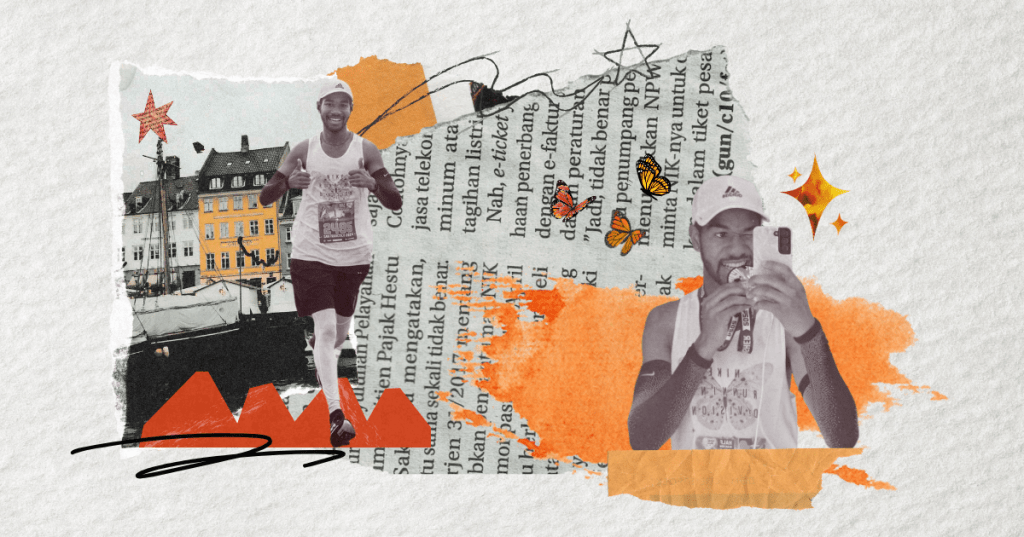
There was about a 6-month gap between when I graduated and moved back home where I still lived close to my friends who were still in school. I picked up running as a hobby and have since completed 4 Half-Marathons and 1 Full-Marathon in under a year. (I’ll do a full post on this experience in the future).
While I love running, I will admit there were times I overdid it or pushed myself to simply distract myself from the reality of my situation. It’s easier to say you’re training for a marathon than unemployed living back home. Exercise is a great way to combat feelings of depression and anxiety, but excessive exercise can do more harm than good (shout-out to shin splints!)
In regards to social media use, limiting your screen time is a tried and true method. If you notice there are specific people whose posts bring up negative feelings, mute their account. You’re still able to see their posts and get in contact with them if you need them, but aren’t being force fed content that is potentially harmful to your mental health. (Out of sight of mind)
Lastly, and most importantly, take one day at a time. Instead of worrying about the far-off future, setting small goals for yourself can be a more productive way of spending your time. I often will try to apply to at least 2 jobs a day and when I’m unable to do that, I don’t beat myself up, but instead look for easier things that still make progress towards my goals.
The more time you spend learning about yourself, and less time you spend focused on the lives of others, the easier it will be to identify what goals you have and how to approach them without fear of judgment or criticism from others.
FOMO is a natural part of life. We are social beings and we have a strong innate desire to connect with others. But if we focus solely on the lives of others, we miss out on all the life that’s happening right in front of us.
References
Browne, H. (2023, November 17). The psychology behind the fear of missing out (FOMO). Simply Psychology. https://www.simplypsychology.org/how-to-cope-with-fomo.html
Delzell, E. (2024). Post-college depression: What you need to know. WebMD. https://www.webmd.com/depression/features/post-college-depression
Stamp, C. (2020, October 16). Post-university depression: Feeling lost after graduating university and getting found (again). Plexuss. https://plexuss.com/news/article/post-university-depression-post-graduation-blues
Stanizai, S. (2024, February 5). How to forge your own path when you feel left behind by your peers – couples therapy: Anxiety: Depression: Marriage counseling: LGBTQ+: Long Beach: Seal beach: 562-704-4736. Couples Therapy | Anxiety | Depression | Marriage Counseling | LGBTQ+ | Long Beach | Seal Beach | 562-704-4736. https://www.prospecttherapy.com/blog/2020/2/20/how-to-forge-your-own-path-when-you-feel-left-behind-by-your-peers






 Jalen Gooch
Leave a comment